About ITALIAN BRAINROT TUNG TUNG TUNG SAHUR
A Launch Puzzle Built Around Chain Reactions
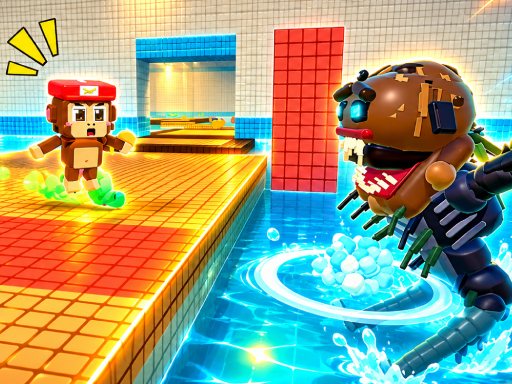
Italian Brainrot Tung Tung Tung Sahur is a physics puzzle where you pull back the character, choose an angle, and release him toward numbered stone golems. The number on each golem represents how many hits it can withstand. Direct impacts work, but many stages are designed around the environment: crates can collapse, enemies can fall onto one another, and a well-placed first shot can trigger several useful collisions.
Forty Levels of Destruction
The campaign contains 40 stages and changes its atmosphere through rain, snow, and other conditions. New layouts introduce steel spikes that punish a careless rebound. The game also includes 12 unlockable brainrot spheres, providing a visual collection goal alongside puzzle completion.
Planning the First Launch
Do not aim at the nearest golem automatically. First inspect what supports each enemy. If two golems stand on stacked crates, breaking the lower support can produce more damage than hitting either target directly. A high arc is useful for reaching the back of the structure, while a flatter shot transfers more horizontal force. When spikes sit below the target, consider where the character will travel after the impact, not only whether the hit connects.
Controls
With a mouse or touchscreen, drag backward to set direction and strength, then release to launch. Keyboard players can use the arrow keys to aim and Space to shoot. Press R to restart a stage and P to pause.
Solving a Difficult Layout
- Count the required hits shown on every golem.
- Look for weak crates or elevated enemies that can fall.
- Identify spike zones and likely rebound paths.
- Use the first attempt to learn the physics rather than forcing the same angle repeatedly.
- Adjust either power or angle—not both at once—so you know what changed.
Read the hit counters after a crate collapses
Picture one golem on a low crate, a second set higher on the same stack and a strip of spikes beyond them. Begin a test launch toward the front golem. Look at the number after impact and remember where the sphere ends up. If the number dropped but the second target and the supporting crates stayed in place, you now know what a direct shot did. The next useful question is whether you can reach the support holding the upper target and leave enough room for a safer rebound.
Take a second test toward the lowest accessible crate. Follow the crate as it moves or breaks. If the upper golem falls toward the lower one, see whether both numbers changed before immediately making your next launch. The fall might remove one target and leave the other with fewer hits to take. It may also drop one into a position that’s hard to reach without sending the sphere over the spikes. The chain reaction was useful if it improved the next angle as well as the counters. At that point finish the weaker target from a position with a clear rebound path instead of trying to reproduce the collapse after the stack is gone.
Why a short throw can help more than a hard one
Take some strength off a steep launch when you want to land on wood immediately in front of the raised golem. A stronger shot may be useful once the route behind the structure is open. The shorter shot gives you a chance to target the support without crossing the spike strip. Check whether the trajectory falls on the good side of the stack. If you miss because the sphere stops in front of it, keep the line and add a little pull on the next attempt. If it reaches the object but travels beyond it into steel afterward, adjust the arriving angle. Moving one variable at a time helps you compare the result.
The rain and snow change the look of the forty stages. Take a moment to make the spikes visible against the current background before launching. When you have several golems standing on shared supports, look for the one shift that could reach more than one of them. If you only need a direct final hit, make that shot with the same attention to its landing. Unlockable spheres give you a reason to return to cleared stages and try the cleaner sequence without relying on extra collisions.
Game credit on GameMonetize · Mapi Games