About Ricochet Rage
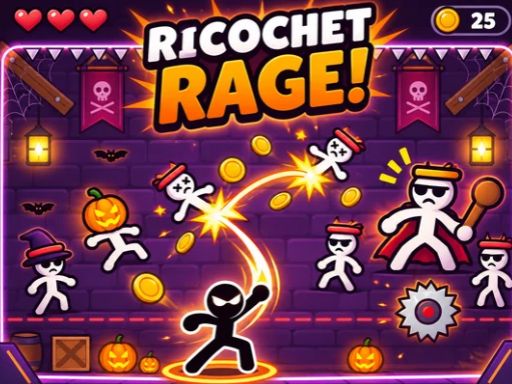
The first launch in Ricochet Rage is a geometry problem disguised as a fight. You drag back from the stickman, release him and watch what happens when he reaches a wall. You can aim straight at an enemy or send him off the wall first. The better shot is often the one that puts him somewhere useful after the first hit. That is how a launch turns into a chain rather than ending beside the first target.
Draw a path with two legs
Look for a wall that gives you a path past one target and back toward another. Start by asking where you want the hero to go after the bounce. Then work backward to the point on the wall that can give him that direction. For example, if two enemies sit near the same side of the room, look for a bank that can run along their side rather than sending the hero straight out of it. The path you choose will depend on where the hero starts and which faces of the room are open.
Try the angle and watch where the first rebound actually goes. If the hero passes above the second enemy, work out which part of the line you would change on a repeat. You may have picked a point on the wall too close to a corner or aimed too directly at the first piece. The miss is useful information. Remember a visual point you can aim at again and make a smaller change on the next launch.
Build the combo before spending the power-up
Chaining hits gives you combos and builds toward the game’s Rage mode. It is worth looking for a second and a third target before you release, even if you only get two of them on the first try. Tap the power-up buttons or press 1, 2 or 3 to use a power-up when you have one ready. Decide what the power-up might change about the next action. If you have a clear multi-hit line already, you can try it and keep the power-up for a room where you cannot see a useful rebound.
After each wave, use the upgrade choice to work on something you have seen in the run. If you get early hits and have trouble keeping the chain going, choose an option you think will help carry the shot. If you keep reaching a boss but do not do well there, judge the available upgrades by that encounter. An improvement means more when you have a way to see it, such as hitting the additional target you kept missing or getting farther against the boss.
Aim the first impact for the second one
Picture the hero on the left, one enemy near the top wall and another farther right. Look for a point on the wall that could send the hero back through the second part of the board. Drag back only once you have traced the incoming and outgoing legs in your head. Release toward the first enemy near the wall. Watch where the hero makes contact and which way the bounce travels. If the first hit worked but the return crossed below the far enemy, start the next shot from a slightly different angle. Keep the first target in the line while bringing the rebound closer to the second. A direct hit on the distant enemy teaches you much less about that bank.
In a story wave, look for opponents arranged along both legs before spending a power-up. After a successful wave, choose the upgrade that answers the previous result. For a boss, spend the first attempt watching which part of the arena stays usable while it moves. The bank that cleared several small targets may put you straight into a boss pattern. Use Boss Rush or an available boss replay to start with a shorter rebound, then add a longer leg once you know what is open. Daily, Weekly Gauntlet and Endless give you other layouts to test the same idea, but the wall contact still needs a purpose on every attempt.
Game credit on GameMonetize · Afzaal Games