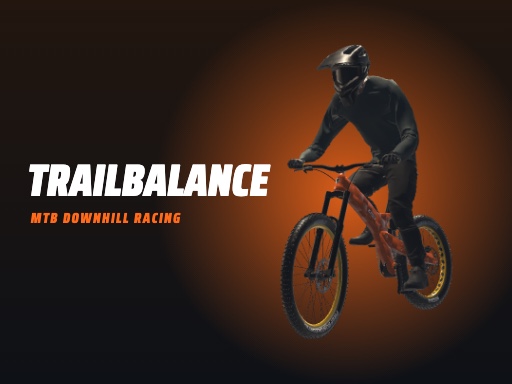
About TrailBalance
Mountain Biking Governed by Weight and Traction
TrailBalance is a 3D racing game where the rider’s position matters as much as steering. Thirty-five technical courses include roots, rocks, drops, climbs, and descents in dry, wet, and winter conditions. Wheelies, skids, and crashes emerge from the physical interaction between bike, rider, brakes, and trail rather than from fixed stunt animations.
A Field of Twenty Riders
Every race includes 20 competitors. Career mode organizes events into seven-round seasons, awarding league points and GP rewards before promotion. Practice mode opens every course without season pressure, allowing repeated attempts and immediate movement to the next trail.
Controls
- Steer: A and D
- Pedal: W
- Rear/combined brake: S
- Shift rider weight: Up and Down
- Front brake: Space
- Side camera: C
- Return to trail: R
- Pause: Escape
Mouse dragging and landscape touch controls provide equivalent movement on supported devices.
Moving Weight on Climbs and Descents
Shift forward during a climb to keep the front wheel useful, but avoid leaning so far that traction becomes unstable. On a steep descent, move weight back to reduce the chance of going over the bars. Before a drop, center the rider and prepare to absorb the landing instead of braking hard in mid-air.
Two Brakes, Different Risks
The front brake stops quickly but can pitch the rider forward when used aggressively. The normal brake is safer for controlling a long descent. Brake before a wet or icy corner, release some pressure during the turn, then pedal when the bike is aligned with the exit.
Workshop Decisions
Bike setup, tires, and gearing should match the event. Wet and winter routes benefit from dependable traction. A climbing course needs gearing that does not exhaust momentum before the summit. Practice provides a place to compare setups without losing league points.
The crest is where the rider's job changes
In Practice, take one climb that leads straight into a descent. Go up with enough pedal input to maintain motion and shift the rider’s weight forward only far enough to keep the front wheel usable. Watch the moment the front tire clears the top. Ease the pedal as needed and start moving the rider closer to a balanced or rearward position while you can still see the first downhill turn. Wait until the bike reaches it before deciding how much pressure to use. If you used Space hard while already leaning at the top, watch whether the front of the bike pitches. Try using S more gently on the following attempt to see whether you can approach the turn with moving wheels and enough grip to choose a line.
On the next run take the same trail with riders nearby. If someone is climbing in front of you, leave more space before the crest. They may slow down once the track beyond it comes into view, exactly when you were preparing to let the downhill speed build. If another rider leaves a safe outside line, decide whether the line continues past the first rough patch before using it. You can keep a place for longer if you choose which part of the descent will be wide enough to pass instead of committing while stationary behind somebody on the climb.
Use the side view to see which weight change you need
Press C on a forgiving stretch to compare the angle of the rider and bike before the next crest. Use the same trail, tires and gear while testing a shorter shift of weight. If the front lifts while pedaling up, move the weight sooner and see whether you can keep steering; if the rear begins losing grip on the descent, change how early you brake before trying a new tire. In Career, bring the line you can reproduce into the seven-round season. A cleaner crest becomes a useful place to protect position while other riders are deciding how to take the next corner. In Practice, you can stop after that single comparison and move directly to another course with the same setup.
Game credit on GameMonetize · Broxy Games Ltd.