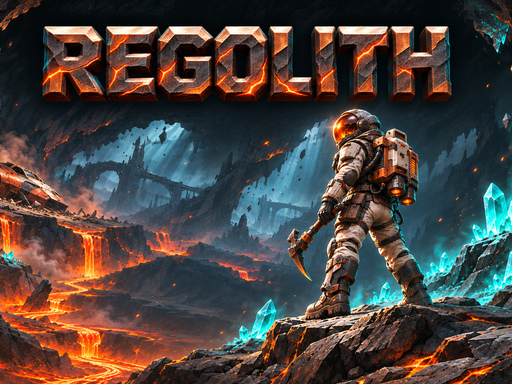
About REGOLITH
A Cave Where Every Material Behaves Differently
REGOLITH begins after an astronaut crashes on an unknown planet. The damaged ship is missing five parts, and each part lies somewhere below the surface. Instead of following a fixed corridor, you can dig through a cave made from small simulated pixels. Rock collapses like loose ground, water flows into open space, fuel catches fire, acid eats through terrain, and lava hardens when it meets water. The route is something you create, not merely something you discover.
Five Underground Worlds
The descent crosses five distinct regions filled with environmental hazards and alien life. A blocked room may be opened with a mine, reached by carving a narrow tunnel, or flooded to remove the creatures inside. The same material can be useful or dangerous depending on where it moves. Water can extinguish flames, but releasing it carelessly may fill a path you still need. Lava can close a route, yet controlled cooling can create solid ground.
Digging Is a Strategic Choice
Before cutting below the astronaut, inspect what is supporting the nearby terrain. A large pocket of sand or rock may collapse into the new opening. When a liquid is visible behind a thin wall, approach from a position that leaves room to escape. Mines solve hard barriers quickly, but a tunnel made with basic tools gives more control over the final shape.
Controls
- Move: A/D or Left/Right
- Jump and jetpack: W, Up, or Space; hold to continue thrust
- Dig downward: S or Down
- Aim: Mouse
- Use tool: Left click
- Change tool: 1–4, Q, or mouse wheel
- Pause: P or Escape
Using the Jetpack Well
The jetpack is most valuable as a correction tool. Short bursts can cross a gap or slow a fall without wasting control. Holding thrust inside a narrow shaft may push the astronaut into a hazard above. Create wider chambers where you expect to change direction, and leave a climbable return route before dropping into a deep section.
A cut through loose rock above a pool
Find a place where loose rock ends beside water. Before digging, choose a spot beside the rock with higher ground behind you. A small opening cut into the lower part of the rock can make material fall into the new pocket. Wait to see where it accumulates. If it fills the place you wanted to stand, take the next cut from the side instead of digging directly below your boots. Rock grains tell you how a new tunnel is settling. Water behaves differently because it continues through gaps long after the material on the cut edge has stopped moving.
If you put an opening into the wall beside the water, look first at the lowest part of the room that can receive it. That low point may be your planned route back to the surface. Cut a new pocket away from the return path if you want the water to do something useful below. The comparison is simple. In a layer of loose rock, look for what drops over your head or fills your footing. Next to water, look at where a new low path leads. Give yourself enough space above the work to use a short burst of the jetpack after either cut.
Read the colors before tunneling farther
Use one wall to separate two materials until you understand where both will go. If water reaches lava, look at the place where it cools into solid ground. That newly solid material may give you a place to stand, or close the opening you were expecting to use. Water can also put out fires. Fuel can catch and acid can eat through terrain, so a liquid pool with the wrong material may undo the route you’ve just cut. Keep the entrance visible while you release a small part of it. When a room can be approached from both sides, use the side where the material moves away from the landing. Leave a short raised shelf so you can stop and see the result before committing the astronaut to the next chamber.
The next ship part may be deeper in the cave you just changed. Once it is reachable, mark the return by taking note of an intact ridge above the new cut. That landmark is more dependable than remembering an opening that may have filled while you explored.
Game credit on GameMonetize · Mapi Games