About Freekick Clash
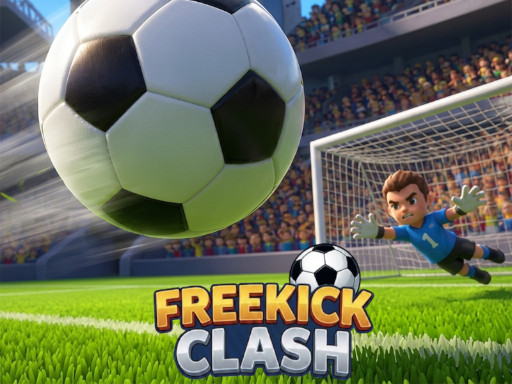
A free kick leaves you time to study the wall and goalkeeper before choosing where the ball will go. Freekick Clash uses that moment as its entire football challenge. Pick a national team, then look at the shot you have in front of you. The route you want is usually easier to judge if you consider the angle from the ball first, the last defender it must get past second and the corner the goalkeeper will have to reach third.
Two walls that call for different shots
**The wall closes one side and the keeper is near the middle.** Stand at the aiming view and follow the outside shoulder of the wall toward the goal. Check whether the apparent gap actually leads inside the post. If it does, choose a line that creates room around the last defender while keeping enough of the goal available. Aiming directly at a wide corner gives little margin if the edge of the wall is already close to that route. Aim a little farther inside when there is a gap to use. After the shot, watch which object the ball came closest to. If it passed the wall easily but missed beyond the post, the opening was good and the target needs to come inward.
**The wall blocks the obvious route and the goalkeeper has shifted toward the remaining angle.** Look above the outer part of the wall for a ball path with room to drop toward the net. From farther away, a change to your height or power can move the point where the ball drops, as well as where it passes the wall. From close in, a simple route to the other side may be better if the wall leaves one. Use the first shot to learn the clearance you have. If the ball hits the player at the edge of the wall, adjust the height or move the aim sideways a little. If it clears the defender and then flies beyond the goal, change what happened after clearance rather than changing both the direction and the force together.
Distinguish the block, the save and the miss
- The ball hits the wall. Follow where it made contact. A wide defender can be beaten from a different angle, and a higher contact near the top of the wall tells you that a small change in elevation may be enough.
- The keeper makes the save. The ball reached the goal area. Look at where the goalkeeper waited and how far they had to move. If it was an easy central save, choose a different destination inside the posts.
- The ball misses wide or high. Observe the place where the shot left the playable target. A line that cleared the wall can still be useful with a small adjustment. Get it into the goal area before trying to put it closer to the woodwork.
Build a repeatable World Cup attempt
Select the team you want and use the tournament’s set pieces to practice reading defensive arrangements. Recognize a recurring wall by the gap it leaves instead of assuming the same side will open on the next kick. Against a keeper covering the near corner, check whether a shot toward the far side can reach it without crossing the defenders. Make a second attempt with just one adjustment if that option is available. This shows you what changed. When you move on to a new defensive setup, use your previous shot as a reference for how the game bends or lifts the ball, then choose a route based on the new positions.
Aim with the mouse or pointer and confirm the shot using the control shown. Watch the flight until it ends rather than returning to the aim as soon as the ball takes off. The closest part of the route tells you where the useful adjustment is. On a successful strike, remember one thing you can see again, such as the outside edge of the wall or the goalkeeper’s distance from the post. That makes the next opening easier to find when the national-team challenge gives you a similar kick.
Game credit on GameMonetize · Sour Mango Games