About RALLY ART
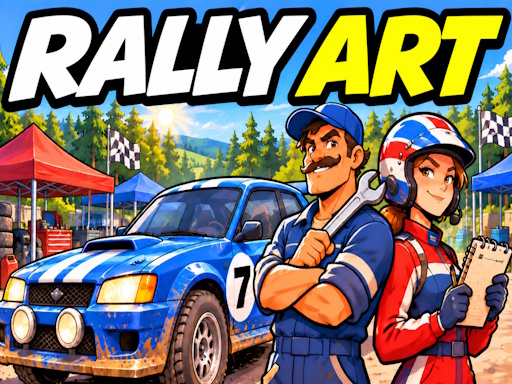
Nika calls the next turn before the car reaches it. That gives you the chance to decide what to do while the road in front of the bonnet is still easy to read. In RALLY ART, the useful time to brake for a bend is often while you are looking at the stretch immediately before it. The game makes that lesson stick by sending the same driver from forest roads to rain, snow, a quarry and mountain passes. A corner you would take confidently in dry conditions can demand a completely different approach later in the campaign.
Use the call to pick a braking point
Try a forest stage without worrying about winning. When Nika calls a tighter corner, look for a roadside landmark you can recognize next time, such as the edge of a group of trees or a visible change in the road. Make that your first braking reference. Ease off while the car is still pointing straight, wait for the speed to come down and use one clear steering adjustment. Feed the throttle back in as you see a way out. If the car runs wide on exit, move your braking reference earlier on the next attempt. You now have one thing to test, and a way of telling whether it helped.
Snow changes that experiment. On a snowy approach, start slowing earlier and give the car room to settle between steering inputs. On a wet route, watch how much space you use after releasing the brake. In the quarry, pay attention to the moment the wheels begin to point away from the road you want. A brief handbrake tap may help a genuinely tight turn, but it tells you little about what went wrong if you use it on every bend. A missed apex and a poor exit are separate problems. Correct whichever one is costing you the next section of road.
What your ghost can show you
Run a stage twice and watch where the ghost pulls ahead. If it gains on the straight after a corner, you may have lost the time before the straight even began. Compare where your two runs point the car when they reach the exit. An earlier brake and a steadier line can put you back on the throttle sooner. Try that change by itself. The next replay gives you more information than a run in which you brake later, change the camera and use the handbrake all at once.
Use the modes to answer different questions. Free rides give you time to recognize the road. Time attacks make it easier to compare a chosen line. A duel adds another car to account for, while an elimination asks for a sustainable pace even when the ideal line is busy. The 41-stage campaign includes all of these alongside regular races, so the habits you build in one format will be tested in another.
Ask Andrey for a change you can measure
If you repeatedly overshoot the same bend, compare your braking points before spending credits. Tyres and brakes are worth testing on routes where you lose time changing direction or getting the car back under control. Engine and gearbox upgrades are easier to judge where you can hold the throttle. Suspension gives you another variable to consider as the terrain changes. The garage lists ten unlockable rally cars and offers paint, stripes and numbers. Judge a performance upgrade in a familiar sector and leave those visual choices to your taste.
A rally car for the full campaign
When you unlock a car, use a free ride or time attack to see what it changes before making it your only choice. Compare the point at which you can begin accelerating after a medium corner. If the new car is more responsive going in but still needs a correction coming out, try the same car on a slower route and decide whether the response suits your hands. On a mountain stage, give yourself a bend where braking and turning both matter. On a field stage, choose a long sector where you can hold the accelerator and see what the drivetrain contributes. Buying a car changes the whole experiment at once. A single component upgrade gives you a clearer result when you already like how your current car responds.
Daily rewards, crates, the wheel, puzzles and the album sit alongside the driving modes. If you use them to grow the garage, give the next unlock a route it can earn a place on. Put a quicker car into a familiar timed sector, or give a newly tuned one the same quarry bend you have been using to practice the handbrake. Return to the campaign once you can describe where the new setup saves time. That keeps collecting cars tied to finding something you actually want to drive.
Keyboard reference
W or Up accelerates. S or Down brakes or reverses. A, D and the arrow keys steer. Space is the handbrake. Q looks back, C changes the view, R resets your car to the road and N restarts. P pauses and M controls sound.
Game credit on GameMonetize · Ushba Games